
Why Messy Business Info is Sending Your Island Leads to a Competitor Down the Street
Why Messy Business Info is Sending Your Island Leads to a Competitor Down the Street
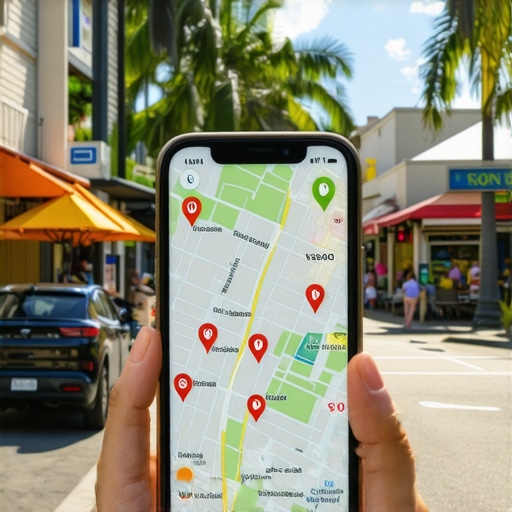
Imagine a potential customer standing in the heart of Kaka’ako. They need an emergency plumber, and they need one now. They pull out their phone and search for local help. Your shop is only three blocks away, but your google business profile seo is neglected. Perhaps your “Open Now” status is incorrect because of an unupdated holiday schedule, or maybe your phone number has a single digit transposed on an old Yelp listing. Instead of clicking your “Call” button, they see a competitor in Kalihi – miles further away – who has a pristine, verified profile. They click, they call, and you just lost a high-value lead to a business that was objectively less convenient for the customer. This is the reality of “Data Decay” in the Hawaii market.
In the islands, word of mouth used to be everything. But in 2026, Google is the digital “word of mouth.” If your business information is messy, inconsistent, or outdated, you aren’t just making it hard for customers to find you; you are actively telling Google’s algorithm that your business is unreliable. This “invisible” data friction creates a wall between you and your neighborhood leads, sending them straight to the competitor down the street who took the time to clean up their digital footprint.
Internal Link: Why Your Honolulu Business is Hidden from Searchers Just Two Blocks Away
The Invisible Wall: How Messy Data Breaks Google’s Local Algorithm
To understand why messy data kills your rankings, you have to understand the three pillars of local search: Relevance, Distance, and Prominence. While most business owners focus on distance (thinking proximity alone will save them), Google prioritizes trust. Trust is built through consistency. When your Name, Address, and Phone number (NAP) vary across the web, Google’s confidence in your business’s existence and legitimacy drops.
This is where google business profile seo becomes a game of precision. If your business is listed as “Island Plumbing & Leak Detection” on your Google Profile but simply “Island Plumbing” on a local directory, Google’s AI may struggle to “tie” those two entities together. This fragmentation lowers your Prominence score. Prominence is essentially Google’s way of measuring how well-known and trustworthy your business is in the offline world. If the digital “breadcrumbs” you leave behind are broken or lead to dead ends, the algorithm views your business as a risk to the user experience. To maintain a healthy profile, many experts recommend using google business profile seo tools to monitor for “suspicious edits” or unauthorized changes that can happen when Google scrapes conflicting data from third-party sites.
Furthermore, Google tracks behavioral signals. If a user finds your listing but sees a “closed” sign when they expected you to be open, or if they click a phone number that doesn’t work, they bounce back to the search results. This negative interaction is a signal to Google that your result was not helpful, which can cause your ranking to plummet faster than a bad review ever could.
The High Cost of “Close Enough” (NAP Consistency in Hawaii)
In Hawaii, we have a unique geographical landscape. We have the “Pali Highway Effect,” where a business in Kailua might technically be close in mileage to a customer in Honolulu, but the mountain range makes them worlds apart in terms of travel time. Google understands these nuances better than ever. However, if your service area isn’t defined correctly or your address is formatted inconsistently, you might find yourself competing for leads on the wrong side of the island.
Why does “Honolulu, HI” vs. “Honolulu” vs. “Honolulu, Hawaii” matter? To a human, it’s the same. To a bot, these are different strings of data. When these strings don’t match across your website, your social media, and major aggregators, it creates “noise.” This noise prevents you from ranking for high-intent searches like “plumber near me.” For example, if your Google Profile says you are in Kaimuki but an old Yellow Pages listing has you in Moiliili, Google might hedge its bets by not showing you for either location prominently.
Internal Link: 5 Citation Fixes That Stop Honolulu Customers from Getting Lost
The cost of “close enough” is measured in lost revenue. For a contractor or a lawyer, a single lost lead can represent thousands of dollars. Ensuring your NAP is identical across the “Big 4” data aggregators isn’t just a chore; it’s a fundamental part of your business infrastructure. Without this foundation, any money you spend on advertising is essentially being poured into a leaking bucket.
Why Proximity Alone Isn’t Saving Your Rankings in 2026
A common misconception among Hawaii business owners is: “I’m the only dentist in this neighborhood, so I’ll naturally be #1 on Google Maps.” In 2026, this is dangerously incorrect. Google’s AI-driven search results now prioritize Relevance over simple proximity. If a competitor two neighborhoods over has a more optimized profile with detailed “Services” sections, better categories, and consistent data, Google will “leapfrog” them over you.
Messy categories are a primary culprit. If you are a “General Contractor” but you also do “Kitchen Remodeling,” but you haven’t specified that in your services, you won’t show up when a homeowner in Hawaii Kai searches for a kitchen specialist. Your competitor, who might be further away but has a bulletproof google business profile optimization strategy, will take that lead every time. Business owners can use local seo tools to audit their own category choices and see how they stack up against the competition.
Internal Link: Why Proximity Alone Isn’t Getting You Into the Honolulu Map Pack
We also have to consider the “Service Area Business” (SAB) factor. If you operate out of your home in Manoa but serve the entire island, your data needs to be even more precise. Google is increasingly aggressive at suspending profiles that claim a physical office where none exists, or those that don’t clearly define their service boundaries. If your data is messy, Google’s AI assumes you are trying to “game the system,” and you may find your profile vanished from the maps entirely.
Reviews as Infrastructure: More Than Just Five Stars
In the past, getting a few five-star reviews was enough. Today, reviews are treated as infrastructure. This concept, popularized by experts like Rashid Rehman, suggests that Local SEO is not a one-time marketing campaign but a permanent part of your business’s structural integrity. By 2026, Google’s AI has become incredibly sophisticated at filtering out “low-effort” reviews. A simple “Great job!” with five stars doesn’t carry the weight it used to.
Google now looks for detailed reviews that mention specific services and locations. If a customer writes, “Best AC repair in Ewa Beach, they fixed my central air unit in an hour,” that review acts as a powerful ranking signal for both the service and the location. Furthermore, how you respond to these reviews matters. If you aren’t responding, or if your responses are generic, you are missing an opportunity to reinforce your business’s keywords and relevance.
Internal Link: The Only Review Management Strategy That Does Not Feel Like Spamming Your Customers
The AI also monitors the “velocity” and “authenticity” of your reviews. If you suddenly get 20 reviews in two days after months of silence, it triggers a “suspicious activity” flag. In the 2026 search landscape, slow, steady, and detailed wins the race. This is why having a system in place to generate authentic customer feedback is a critical part of any google maps ranking service.
The 2026 AI Search Race: Why Your Profile Must Be Bulletproof
We are currently in an era where AI doesn’t just show a list of links; it summarizes them. When someone asks an AI-powered search tool, “Who is the most reliable roofer in Honolulu?” the AI scans the web for consensus. If your website says you’ve been in business for 20 years, but your Google Profile says 5 years, and your Facebook page has a disconnected phone number, the AI will likely experience a “hallucination” or, more likely, simply skip your business in favor of one with a clear, unified story.
The risk of GBP (Google Business Profile) suspensions is at an all-time high. Google’s “Search Generative Experience” (SGE) relies on high-confidence data. If your data is conflicting, you are a liability to Google’s reputation. To rank higher on google maps, you must ensure that your digital presence is bulletproof. This means your website’s schema markup must match your Google Business Profile, which must match your citations on Apple Maps, Bing, and local Hawaii directories like the Chamber of Commerce.
External Link: rank higher on google maps
Internal Link: 3 Hawaii Google Maps Fixes to Win the 2026 AI Search Race
AI also analyzes the photos you upload. It uses computer vision to “see” what is in your images. If you are a landscaper but all your photos are of your office dog, you aren’t helping your relevance. High-quality, geo-tagged photos of your work across different parts of Oahu tell the AI – and potential customers – exactly what you do and where you do it.
Actionable Checklist: Cleaning Up Your Island Presence
If you suspect your messy data is costing you leads, don’t panic. You can start cleaning it up today. Here is a step-by-step checklist to help you reclaim your local standing:
- Audit your NAP across the “Big 4”: Ensure your Name, Address, and Phone number are identical on Foursquare, Data Axle, Neustar/Localeze, and Google.
- Sync your website footer with your GBP: Your website is your primary source of truth. Make sure the contact info in your footer is a 100% match with your Google listing.
- Update holiday hours: This is crucial for Hawaii’s tourism-heavy economy. If you are closed on Prince Kuhio Day or Statehood Day, make sure Google knows. This prevents frustrated customers from leaving 1-star “they were closed when they said they were open” reviews.
- Use high-quality, geo-tagged photos: Upload new photos weekly. Show your team at work in recognizable Hawaii neighborhoods. This reinforces your local relevance to the AI.
- Prune your categories: Make sure your primary category is your most important service, and use secondary categories sparingly but accurately.
Internal Link: How to Audit Your Local Search Presence Without Hiring a Consultant
By following these steps, you begin to rebuild the trust that Google’s algorithm requires. It’s not about “tricking” the system; it’s about providing the most accurate, helpful information possible to the people in your community.
Conclusion: Reclaiming Your Neighborhood
At the end of the day, messy business info isn’t just an “SEO thing.” It is a customer experience problem that manifests as a “leaking bucket” for your revenue. Every time a potential customer finds a piece of incorrect information about your business, the “Invisible Wall” gets a little higher, and the competitor down the street gets a little closer to taking your spot in the Map Pack.
In the 2026 AI-driven market, there is no room for “close enough.” Your digital infrastructure must be as solid as the foundation of your building. If you want to stop losing island leads and start dominating your local area, it’s time to take your google business profile seo seriously. Whether you choose to do it yourself or use a professional google maps ranking service like SEO Viper Tools to improve google maps rankings, the most important step is to start today. Reclaim your neighborhood, one clean data point at a time.