
Why Back-Pain Patients in Honolulu Can’t Find Your Practice on Maps
Why Back-Pain Patients in Honolulu Can’t Find Your Practice on Maps
I. Introduction: The Invisible Clinic
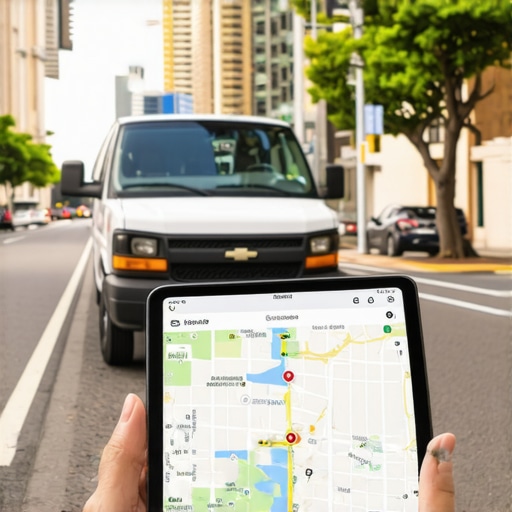
Imagine a patient in Kaka’ako. They’ve been dealing with a pinched nerve for three days, and the pain has finally become unbearable. They pull out their smartphone and type “back pain relief” or “chiropractor near me” into Google. Your clinic is located just three blocks away on Ward Avenue. You have the best equipment, a friendly staff, and years of experience. But as the search results populate, your practice is nowhere to be found. Instead, the top three spots – the coveted “Map Pack” – are occupied by clinics halfway across town or competitors with fewer credentials.
As an SEO expert with over a decade of experience helping medical practices navigate the digital landscape, I see this scenario play out daily in Hawaii. My name is Boris Hrbacek, and I’ve spent years deconstructing the algorithms that govern local visibility. The reality is that in 2026, proximity isn’t enough anymore. Being physically close to a patient does not guarantee you a spot on their screen.
The landscape of google business profile seo has shifted dramatically. If you aren’t appearing in those top three results, you are effectively invisible to the vast majority of local searchers. This post will serve as a comprehensive guide for Honolulu chiropractors and physical therapists to understand why their rankings are failing and how to implement a Why Your Honolulu Business is Hidden from Searchers Just Two Blocks Away strategy that actually works.
II. The “Silent Killer”: NAP Inconsistency
In the world of local search, trust is the primary currency. Google’s algorithm is essentially a massive verification engine. It wants to ensure that when it recommends a business to a user, that business is legitimate, open, and located exactly where it says it is. The most common reason I see Honolulu practices fail is what we call the “Silent Killer”: NAP Inconsistency.
NAP stands for Name, Address, and Phone Number. It sounds simple, but the execution is where most medical offices stumble. If your practice is listed as “Honolulu Back & Spine” on your website, “Honolulu Back and Spine Clinic” on Yelp, and “Honolulu Back & Spine, LLC” on your Google Business Profile (GBP), Google gets confused. When the algorithm encounters conflicting data points, its confidence in your business drops. Consequently, your rankings “die quietly.”
This inconsistency often extends beyond just the name. Perhaps your old suite number is still listed on an obscure medical directory, or your Instagram profile still has an old phone number from three years ago. These micro-discrepancies signal to Google that your business information is unreliable. To fix this, you must perform a thorough audit. I recommend using a professional google business profile audit tool or specialized local seo software to identify every instance of your business across the web and force them into 100% alignment.
III. The 2026 Review Crisis: Quality Over Quantity
For years, the strategy for reviews was simple: get as many as possible. However, following the Discover Core February 2026 Update, the rules have changed. Google has initiated a massive crackdown on what it deems “unnatural” review patterns. We are currently seeing a surge in “retroactive audits” where Google is deleting thousands of reviews that don’t meet their strict quality guidelines.
Even more concerning is that Google Maps is now actively surveying users. If a patient leaves a review for your Honolulu chiropractic clinic, Google may send them a notification asking: “Were you offered a discount or incentive for this review?” If the user answers yes, not only is the review removed, but your entire profile can be flagged for “deceptive practices,” leading to a catastrophic drop in google business profile ranking.
To survive this, you need a strategy focused on high-intent, descriptive reviews. A review that says “Great job!” is worth far less than one that says, “Dr. Smith helped my chronic lower back pain using spinal decompression, and the Kaimuki office was very clean.” You must implement ethical automation. You can learn more about this in my deep dive on Why Review Automation is the Only Way to Compete in Honolulu Today. The goal is to facilitate a steady stream of authentic feedback rather than a sudden burst of five-star ratings that triggers Google’s spam filters.
IV. Proximity vs. Relevance: Why the Pali Highway Matters
In Honolulu, geography is unique. The “Proximity Filter” is a powerful force in Google’s local algorithm. Google knows that a patient in Kailua is unlikely to drive over the Pali Highway for a routine adjustment if there is a highly-rated option in their own neighborhood. However, many Honolulu-based doctors wonder why they don’t show up for patients just a few miles away in Hawaii Kai or Salt Lake.
The problem is a lack of “Relevance Signals.” If your website and GBP only mention “Honolulu,” you are pigeonholing yourself into a very narrow geographic radius. To expand your reach, you need a hyper-local strategy. This involves creating “City Pages” or neighborhood-specific content that signals to Google you serve the broader Oahu community.
Without these signals, you face a significant hurdle: Why Honolulu Businesses Lose Mobile Leads When Crossing the Pali Highway. You must prove to Google that your expertise is worth the drive. This is done through localized backlinking, mentioning local landmarks in your GBP posts, and ensuring your service area is correctly defined in your local seo services strategy.
V. Technical Local SEO: The Website Connection
A common mistake many practitioners make is treating their Google Business Profile as a separate entity from their website. In reality, they are deeply interconnected. Your website’s organic SEO health directly influences your Map Pack performance. If your website is slow, lacks mobile optimization, or doesn’t use proper “Local Business” Schema markup, your GBP will suffer.
One specific technical error I see constantly involves map embeds. Many doctors simply copy and paste an iframe of their location onto their “Contact Us” page. While this is better than nothing, doing it incorrectly can actually confuse search crawlers. You need to ensure you are embedding the official Google Maps API link that is tied directly to your verified GBP. I’ve written extensively on Why Embedding Your Google Map the Wrong Way Actually Hurts Your Local Ranking.
Furthermore, your website needs to be the “source of truth” for your services. If you want to rank for “sciatica treatment in Honolulu,” that exact phrase needs to be supported by a dedicated, high-quality page on your site. This allows Google to connect the dots between the user’s search query and your physical location. Using advanced local seo ranking tools can help you track how these website changes impact your map position in real-time.
VI. The Surge of Map Ads & The 2026 Algorithm
We are currently witnessing a massive shift in how Google monetizes local search. Data shows that Google’s local pack ads surged by 733% between late 2025 and early 2026. This means that even if you are doing everything right, a competitor can sometimes “buy” their way into the top spot. This makes the remaining two organic spots in the Map Pack more valuable – and competitive – than ever before.
The Discover Core February 2026 Update also prioritized “Mobile Readiness” and “User Interaction Signals.” Google is now tracking how long a user stays on your GBP, whether they click to call, and if they look at your photos. If users click your profile but immediately bounce back to the search results, Google interprets this as a sign that your practice wasn’t a good match for the query, and your ranking will drop.
To combat this, you need to focus on google business profile seo that prioritizes engagement. This includes uploading high-resolution photos of your clinic, posting weekly updates about back health, and using the Q&A feature to answer common patient concerns. This level of activity allows you to How to jump the Honolulu map pack queue without buying ads by proving to the algorithm that you are the most relevant and active provider in the area.
VII. Conclusion & Action Plan
For back-pain practitioners in Honolulu, the stakes have never been higher. The difference between being #3 and #4 in the Map Pack can mean dozens of lost patients every month. To recap, your path to dominance requires three things: Absolute Consistency in your NAP data, a Quality-First Review Strategy that avoids the 2026 crackdown, and Technical Integration between your website and your map profile.
The “Silent Killer” of inconsistent data and the surge of Map Pack ads are challenges, but they are also opportunities. Most of your competitors are likely ignoring these technical details. By taking a proactive approach and using the right local seo tools to rank higher on google maps, you can ensure that when a patient in Honolulu is in pain, your practice is the first one they see.
Don’t let your clinic remain invisible. Audit your presence today, fix your inconsistencies, and start treating the patients who are currently searching for you in vain.
Boris Hrbacek
Local SEO Expert & Founder, Honolulu Local SEO