Why Embedding Your Google Map the Wrong Way Actually Hurts Your Local Ranking
Why Embedding Your Google Map the Wrong Way Actually Hurts Your Local Ranking
1. Introduction: The Invisible Saboteur
For most small business owners, adding a Google Map to their “Contact Us” or “About” page is a simple task – a digital “checkbox” to be ticked off during the website build. You go to Google Maps, type in your address, click share, and paste the iframe code. Job done, right? Wrong.
In the high-stakes world of google business profile seo, this “generic” approach is an invisible saboteur. By embedding a map based solely on a physical address rather than your verified business entity, you are creating a “dead end” for Google’s crawlers. Instead of strengthening the connection between your website and your Google Business Profile (GBP), you are essentially telling Google, “A building exists at this location,” rather than “My authoritative business operates here.”
Google relies heavily on “location signals” to verify Name, Address, and Phone (NAP) data. When these signals are fragmented – meaning your website points to a coordinate but your GBP exists as a separate entity – you lose the synergy required to dominate the local Map Pack. In 2026, where the algorithm is more sophisticated than ever, these technical nuances determine whether you appear in the top three results or vanish into the “More Places” abyss. If you want to rank google business profile effectively, you must understand that the map embed is not just a visual aid; it is a critical piece of technical schema.
2. The Fatal Flaw: Generic Address vs. GBP Embed
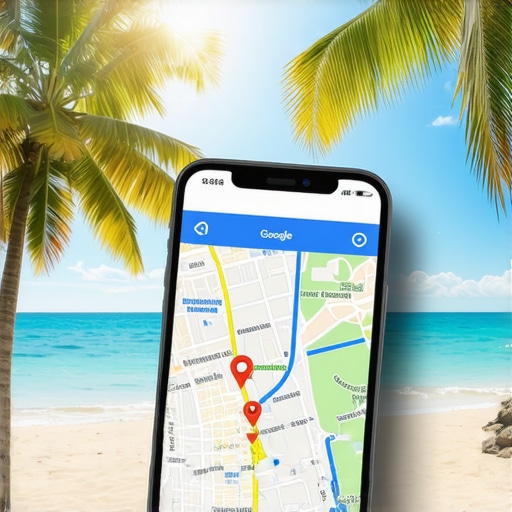
To understand why your current strategy might be failing, we have to look at the technical difference between a generic address embed and a verified GBP embed. A generic embed is generated when you search for “123 Main St, Honolulu” and grab the code. This code points to a geographic coordinate. It is static, lacks metadata, and carries zero “entity authority.”
Conversely, a verified GBP embed is generated when you search for your Business Name. This embed is tied to your unique Place ID and CID (Customer Identification) number. When you use this method, you are creating a direct API-level link between your website’s domain authority and your Google Business Profile. This is the cornerstone of google business profile optimization.
Why does this matter? Because Google’s algorithm is looking for “Entity Validation.” When a user lands on your site and interacts with a GBP-mapped embed, Google registers that interaction as a signal for your specific business entity. A generic address embed fails to pass this authority, leaving your profile to stand on its own without the support of your website’s traffic and engagement metrics. If you are serious about using a google maps ranking service, you must start by fixing this fundamental bridge.
3. The 2026 Local SEO Landscape: Navboost & RankEmbed
The release of the “Fresh Doc Dump” from the DOJ papers has pulled back the curtain on how Google actually ranks local content. Two major players have emerged: Navboost and RankEmbed. Navboost is a system that uses “signals” from user behavior – clicks, hovers, and map interactions – to determine relevance. RankEmbed is an LLM-based system that understands the context and “proximity” of a business in relation to a searcher’s intent.
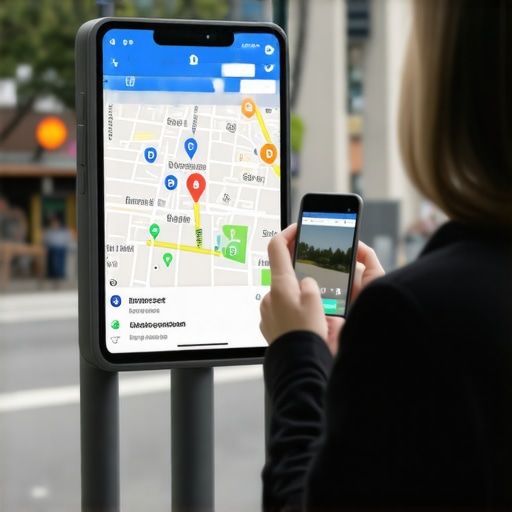
When you use a proper GBP embed, you are feeding the Navboost algorithm. Every time a user zooms in on your map, clicks for directions, or toggles between “Map” and “Satellite” views on your site, Google receives a signal that your business is relevant to that specific location. This interaction helps improve google maps ranking by proving to Google that real humans are interested in your physical location.
Furthermore, RankEmbed uses these signals to understand the “relevance” of your business to the surrounding neighborhood. If your map is just a dead pin of an address, there is no interaction to track. You are essentially starving the algorithm of the data it needs to push you higher in the local map pack seo rankings.
Learn more about The Map Embed Tactic That Most Hawaii Business Owners Get Wrong to see how these signals play out in real-time.
4. Why “Proximity” Isn’t Enough Anymore
A common frustration for business owners is seeing a competitor who is further away from the searcher ranking higher than they do. “But I’m right around the corner!” they argue. This is because, according to the “Whitespark 2026 Local Search Ranking Factors” study, Prominence and Relevance can now override Proximity.
If your competitor has a technically superior website with a verified GBP embed, they are generating more “Prominence” signals than you. Google views them as a more “trustworthy” entity, even if they are two blocks further away. This is why Why Proximity Alone Isn’t Getting You Into the Honolulu Map Pack is a must-read for anyone struggling with stagnant rankings.
By using local seo tools and high-quality gmb seo tools, you can identify where your prominence is lacking. A map embed that is correctly synced with your profile acts as a constant “ping” to Google’s servers, reinforcing your relevance to the local area. This is how you increase google business profile visibility even in highly competitive niches where everyone is fighting for the same three spots.
5. Step-by-Step: The “Right Way” to Embed
If you want to rank higher on google maps, you need to follow this specific protocol. Do not take shortcuts.
- Search for the Business Name: Open Google Maps and type in your exact business name as it appears on your profile. Do not type the address.
- Verify the Profile: Ensure the knowledge panel for your business appears. If it shows “Address not found” or lists multiple businesses, you haven’t selected the correct entity.
- Share and Embed: Click the “Share” button, then select the “Embed a map” tab. Copy the provided HTML iframe code.
- Place on Site: Paste this code into your website’s footer or contact page.
The Advanced “Driving Directions” Strategy: To supercharge your local seo growth, consider embedding a map that already has a destination set to your business. This encourages users to click “Directions” immediately, which is one of the strongest Navboost signals you can generate. This tactic is a core part of any professional google maps optimization service and is essential to get more calls from google maps.
For more advanced techniques, check out How to Own Your Neighborhood Search Results Without Buying a Single Map Ad.
6. The Honolulu Context: Why Island Businesses Struggle
Hawaii presents a unique challenge for local seo services. Our geography – defined by steep mountains, the H-1 corridor, and isolated coastal communities – means that Google’s “proximity filter” behaves differently here than in a flat grid city like Phoenix. In Honolulu, a business that is geographically “close” might be a 30-minute drive away due to traffic or terrain.
Because of this, Google relies even more heavily on digital “trust signals” to determine who to show in the Map Pack. If your technical SEO is based on mainland standards, you are likely falling behind. This is Why Mainland SEO Tactics are Costing Your Hawaii Business Real Leads.
Island businesses must over-communicate their local relevance. A verified map embed that reflects your Honolulu presence, combined with local seo software to track your progress across different ahupuaʻa, is vital. You aren’t just competing with the shop down the street; you’re competing with the algorithm’s perception of “convenience” in a high-traffic environment.
7. Common Mistakes & How to Audit Them
Even if you have the right embed, technical errors can still hold you back. Here are the most common issues we see at our local seo agency:
- Iframe Dimensions: Using fixed widths that break on mobile devices. Ensure your map is responsive.
- Slow Loading Times: Maps are heavy. If your map isn’t optimized, it will hurt your Core Web Vitals, which is a confirmed ranking factor for 2026.
- Missing Schema: Your map embed should be accompanied by LocalBusiness Schema markup that includes your Map URL and CID.
- Lazy Loading: While lazy loading is good for speed, “over-lazy” loading can prevent Google from seeing the map during the initial crawl.
To identify these issues, you should use a google business profile audit tool. Tools like SEO Viper Tools or a dedicated google maps rank tracker can help you see if your map interactions are actually translating into higher rankings. If you aren’t monitoring your google business profile ranking weekly, you are flying blind.
Understanding How Hawaii Local Search is Shifting and What Business Owners Need to Know for 2026 will give you the foresight to fix these technical errors before they become permanent ranking anchors.
8. Conclusion & Call to Action
The map embed on your website is more than a convenience for your customers; it is the digital bridge between your website and the Google Map Pack. By moving away from generic address embeds and embracing verified GBP entity embeds, you align your business with the 2026 Navboost and RankEmbed algorithms.
Stop letting small technical errors sabotage your local reach. Whether you choose to audit your site yourself using local seo software or hire a specialized local seo agency to handle the heavy lifting, the time to act is now. Fix your map, verify your entity, and start dominating the Honolulu search results today.