How We Built City Pages That Actually Rank Across the Islands
How We Built City Pages That Actually Rank Across the Islands
In the world of digital marketing, there is a common misconception that SEO is a “one-size-fits-all” machine. You plug in your keywords, build a few links, and wait for the leads to roll in. However, if you are a business owner in Hawaii, you already know that the “Mainland way” of doing things rarely translates to success in the 808. Local search in the islands is a different beast entirely. Between the unique geography of the volcanic landscape and the dense urban clusters of Honolulu, traditional local seo services often fall flat because they fail to account for the “Island Factor.”
I’m Maaz Saleem, and over the last five years, I’ve specialized in google business profile seo and hyperlocal strategies designed specifically for the Hawaii market. We’ve seen countless businesses struggle because their digital presence doesn’t reflect the physical reality of their service area. As we move into 2026, the landscape is shifting even further toward AI-driven results and hyper-local signals. If your strategy hasn’t evolved, you’re likely losing ground to competitors who understand how to bridge the gap between a website and the physical streets of Oahu, Maui, and Kauai.
In this guide, I’m going to pull back the curtain on how we build city pages that don’t just sit on a site – they dominate the search engine results pages (SERPs) and drive actual foot traffic and phone calls. We’ll look at the technical architecture, the content requirements, and the essential synergy required to rank google business profile listings alongside your organic pages.
The Anatomy of a High-Ranking Island City Page
One of the biggest mistakes I see Hawaii businesses make is the creation of “doorway pages.” These are thin, low-quality pages designed solely to trick search engines into thinking a business has a presence in a city where it doesn’t. Google’s algorithms have become incredibly sophisticated at sniffing these out. To rank in 2026, your city pages must provide genuine value to the local resident.
A successful city page for a Kailua-based business should look and feel entirely different from a page targeting Kapolei. Why? Because the audience is different, the landmarks are different, and the search intent often varies. When we develop these pages, we focus on 100% unique content tailored to the specific town. If you are copy-pasting the same text and just swapping out “Honolulu” for “Aiea,” you are falling into the trap I discuss in my article on Why Mainland SEO Tactics are Costing Your Hawaii Business Real Leads.
Key Elements of an Effective City Page
- Hyperlocal Landmarks: Don’t just mention the city name. Mention the proximity to the H-1, the Pali Highway, or local staples like Ala Moana Center or the Pearlridge Farmers Market. This signals to Google that you actually understand the area.
- Service-Specific Keyword Research: People in different parts of the island search differently. A contractor in the North Shore might see more queries for “beachfront home repair,” while someone in Manoa might see more “historic home restoration.”
- Integrated Local Reviews: Don’t just show general reviews. If the page is for Mililani, feature reviews from your Mililani-based customers. This builds immediate trust with the reader.
- Geo-Specific Imagery: Use original photos of your team working in that specific neighborhood. Metadata in those photos (EXIF data) can further reinforce your local relevance.
By treating each city page as a standalone resource for that community, you create a “relevancy signal” that search engines cannot ignore. This is the foundation of city page seo that actually converts.
Beyond Proximity: Ranking Factors for 2026
For years, the “Map Pack” was dominated by whoever was physically closest to the person searching. If you were standing in Downtown Honolulu searching for a “law firm,” the closest office won. But things have changed. In 2026, proximity is just one piece of the puzzle. Google now prioritizes Relevance and Prominence over simple distance.
This shift is why some businesses find themselves asking Why Proximity Alone Isn’t Getting You Into the Honolulu Map Pack. To compete today, your website needs to be technically optimized for AI search. This includes the implementation of LLMS.txt files, which provide clear instructions to Large Language Models (like Gemini or GPT-4) about your business’s core services and service areas. This “AI readiness” is becoming a critical component of local seo services.
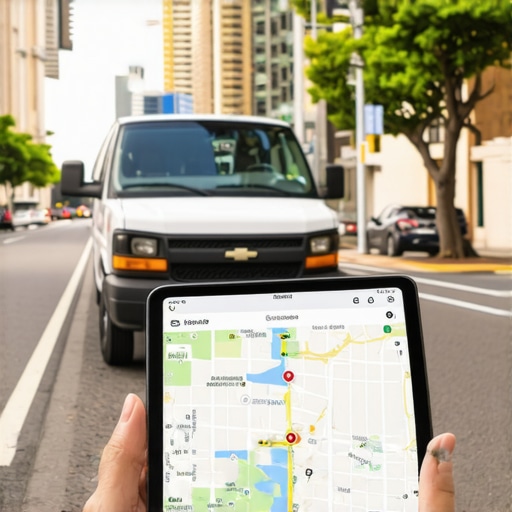
Furthermore, you need to understand how your rankings fluctuate across the island. A business might rank #1 in Kaka’ako but drop to #15 in Kalihi. To visualize this, we use a google maps rank tracker like SEO Viper Tools. These tools allow us to see a grid-based view of rankings, showing exactly where your “ranking bubble” ends. If you see your visibility dropping off as you move toward the Ewa Plain, that is a signal that your city pages for that area need more “Prominence” signals, such as local backlinks and targeted content.
The Role of Local Schema Markup
Structured data (JSON-LD) is the language search engines use to understand the structure of your site. For island businesses, this means more than just “LocalBusiness” schema. You should be using “ServiceArea” and “AreaServed” properties to explicitly tell Google which zip codes you cover. This technical layer ensures that your hyperlocal seo efforts are properly indexed and associated with your physical location.
The Synergy Between City Pages and Google Business Profile
Your website and your Google Business Profile (GBP) should not exist in silos. They are two halves of the same coin. When we implement a google maps ranking service for our clients, the first thing we do is ensure a “relevancy loop” exists between the two.
If you have a city page for Waipahu, your GBP should occasionally feature google business profile posts that mention Waipahu-specific projects or news. When Google sees that your website has deep content about a location and your GBP activity mirrors that, it significantly increases your chances to rank higher on google maps. This is the essence of modern google business profile optimization.
Many business owners realize too late that your Honolulu business might be hidden from searchers just two blocks away because your profile lacks the necessary “local juice” to push through the proximity filter. By linking your city pages directly from your GBP posts and ensuring your NAP (Name, Address, Phone) data matches perfectly across both, you create a unified front that search engines trust.
The Ultimate Island Local SEO Checklist
Building city pages is a marathon, not a sprint. To ensure your pages and your profile are performing at their peak, follow this checklist tailored for the Hawaii market:
- NAP Consistency: Ensure your business name, address, and phone number are identical on your website, your GBP, and every local directory. Even a small discrepancy (like “Ste.” vs “Suite”) can cause issues.
- Hyper-local Citations: Don’t just aim for the big directories like Yelp. Focus on Hawaii-specific sources. Check out our guide on Local Citation Sources That Actually Move the Needle for Island Businesses.
- JSON-LD Schema: Implement advanced schema that includes your geo-coordinates and specific island neighborhoods.
- Review Management Strategy: Actively solicit reviews from customers in specific target areas. A review that says, “Great service in Kaneohe!” is worth its weight in gold for a Kaneohe city page.
- Mobile Optimization for the H-1: Hawaii has some of the worst traffic in the nation. Many of your customers are searching for you while sitting in gridlock (hopefully not while driving!). Your site must load instantly on mobile devices with limited connectivity.
- Regular Audits: Use a google business profile audit tool from SEO Viper Tools to identify missing information or optimization opportunities that your competitors might be exploiting.
If you’re wondering where you stand, I highly recommend using local seo tools to run a baseline report. You can’t fix what you can’t measure, and in the competitive Honolulu market, flying blind is a recipe for being buried on page two.
Case Study: Beating the “Invisible Listing” Bug
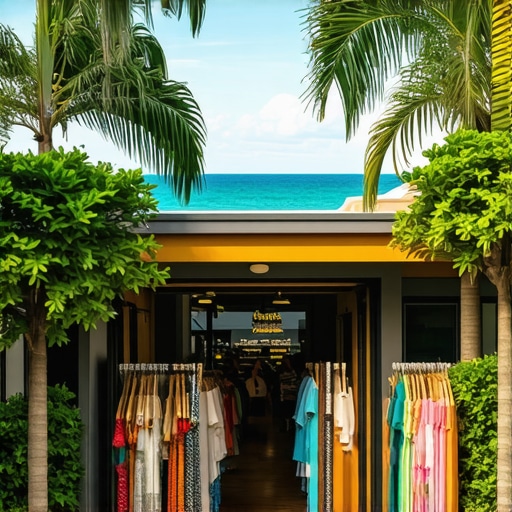
We recently worked with a boutique retail shop in Honolulu that was struggling to attract customers from the West Side. Despite having a great reputation, they were essentially invisible to anyone living past Pearl City. They were suffering from what we call the “Invisible Listing” bug – where Google’s proximity filter is so tight that it ignores highly relevant businesses just a few miles away.
To solve this, we didn’t just build a Kapolei city page; we built a Kapolei *experience*. We created content around the commute from the West Side to their shop, offered “West Side Wednesday” discounts, and secured backlinks from local community blogs in the Ewa area. We also used local seo software to track their progress and adjust our google maps marketing strategy in real-time.
The result? Within four months, they saw a 40% increase in foot traffic from customers with West Side zip codes. We’ve documented the full technical process in our case study: How We Beat the Proximity Filter to Rank a Honolulu Shop 10 Miles Out. It proves that with the right gmb ranking service and on-page strategy, you can expand your reach far beyond your physical front door.
Preparing for the Future of Hawaii Local Search
As we look toward the end of 2026, the way people find local services is continuing to evolve. We are seeing a shift toward “zero-click” searches, where users get all the information they need directly from the search result without ever clicking through to a website. This makes your google business profile seo more important than ever.
However, your website remains the “source of truth” for Google’s AI. If your site doesn’t provide the deep, localized context that the AI is looking for, your GBP will eventually lose its ranking. This is why specialized local business seo is a holistic endeavor. You need to avoid common pitfalls, such as the 5 GMB Optimization Honolulu Mistakes Costing You 2026 Leads.
The businesses that thrive in the coming years will be those that embrace how Hawaii local search is shifting. They will move away from generic “Mainland” strategies and double down on hyper-local relevance. Whether you are a law firm in the executive center or a plumber in Wahiawa, your digital strategy must reflect the unique geography and culture of the islands.
For law firms specifically, the competition is fierce. Standard packages often fail to capture the nuances of the local legal market. If you’re in the legal field, you should understand Why Mainland SEO Packages Don’t Work for Honolulu Law Firms and look for a more tailored approach.
Conclusion: Claim Your Spot in the Map Pack
Local SEO in Hawaii isn’t just about high search volumes; it’s about being found by your neighbors when they need you most. Building city pages that actually rank requires a blend of technical expertise, deep local knowledge, and the right local seo tools. By focusing on unique content, technical schema, and a tight synergy with your Google Business Profile, you can break through the noise and dominate the local market.
If your current strategy feels like it’s stuck in traffic on the H-1, it’s time for a change. Don’t let your business remain hidden. Use a google business profile audit tool from SEO Viper Tools today to see where you stand, or reach out to me, Maaz Saleem, for a comprehensive consultation. Let’s make sure your business is the one that shows up when the islands are searching.