The Brutal Reason Honolulu Dentists Are Losing the Local Map Pack Battle
The Brutal Reason Honolulu Dentists Are Losing the Local Map Pack Battle
You’ve spent decades building a reputation in Honolulu. You know your patients by name, you’ve sponsored the local Little League teams, and your clinical skills are second to none. Yet, when a potential patient in Kaka‘ako or Downtown Honolulu searches for a “dentist near me” on their iPhone, your practice is nowhere to be found. Instead, the screen is dominated by three corporate dental chains that have been in the islands for less than five years.
This is the brutal reality of the Local Map Pack. In 2026, the Map Pack (the top three local results featured on Google Maps) isn’t just a convenience – it is the primary gateway to your dental chairs. Research consistently shows that the Map Pack captures over 40% of all clicks on mobile searches. For dentists, where the decision to call is often made in seconds based on proximity and reviews, being fourth or fifth is the same as being invisible. The “villain” in this story isn’t just a lack of effort; it’s the rise of Corporate Dental Support Organizations (DSOs) that treat google business profile seo as a high-stakes science while local practitioners still treat it as a “set it and forget it” task.
The myth that simply being a good dentist with a long-standing office will keep you at the top is dead. Proximity is no longer the king of the mountain. If you want to reclaim your territory, you need to understand why the corporate giants are winning and how to use their own data-driven tactics against them.
The Proximity Trap: Why Being “Near Me” Isn’t Enough in Honolulu
Many Honolulu dentists believe that because their office is physically located in a high-traffic area like Ala Moana or Beretania Street, they should naturally rank for patients in those areas. This is the “Proximity Trap.” While Google’s algorithm certainly values distance, it values “Relevance” and “Prominence” even more. We often see what we call the “Pali Highway effect” – a phenomenon where a practice’s rankings completely vanish the moment a searcher crosses a specific geographical threshold or moves just a few blocks away.
In our deep dives, we’ve found that Why Proximity Alone Isn’t Getting You Into the Honolulu Map Pack is often due to a lack of localized signals. Google’s AI is now sophisticated enough to realize that a user in Manoa has different intent than a user in Waikiki. If your digital footprint doesn’t explicitly tie your practice to these micro-neighborhoods, Google will default to the corporate chain that has optimized its profile for every square inch of the island.
This is why Why Your Honolulu Business is Hidden from Searchers Just Two Blocks Away. If your profile lacks the technical depth to prove you are the most prominent option, Google will sacrifice proximity for a “more relevant” result located further away. To combat this, you must move beyond basic contact info and start feeding the algorithm the specific geographic data it craves.
The DSO Threat: How Corporate Chains Are “Stealing” Your Patients
Corporate DSOs aren’t necessarily better at dentistry, but they are significantly better at data. They employ entire teams dedicated to google business profile optimization. They treat their Google Business Profile (GBP) not as a listing, but as a dynamic lead-generation engine. While a local dentist might update their photos once a year, a DSO is using a professional google maps ranking service to ensure their data is refreshed weekly.
DSOs use advanced GBP ranking tools to monitor their “share of voice” across Honolulu. They know exactly which keywords are trending – whether it’s “emergency tooth extraction” during a holiday weekend or “Invisalign specials” in the lead-up to graduation season. They simulate local authority by flooding their profiles with hyper-local content that makes them look like the neighborhood staple, even if their headquarters is in Dallas or Irvine.
They are effectively “stealing” your patients by out-maneuvering you in the technical arena. They understand that Why Mainland SEO Tactics are Costing Your Hawaii Business Real Leads often comes down to a failure to adapt to the high-velocity requirements of modern search. To compete, you don’t need a corporate budget, but you do need to adopt their technical rigor.
The “Invisible Code”: Technical GBP Optimization for 2026
By 2026, Google’s transition to an AI-first search engine (Search Generative Experience) will be complete. This means the “Invisible Code” behind your profile – specifically Local Business Schema and attribute selection – is more important than your actual website content. To rank google business profile listings effectively, you must ensure your “Primary Category” is perfectly aligned with your most profitable service. Choosing “Dentist” is a start, but if you want the high-value cases, you need to strategically utilize sub-categories like “Cosmetic Dentist,” “Dental Implants Provider,” or “Periodontist.”
Furthermore, Google’s AI now scans the photos you upload for “entities.” If you upload a photo of a dental implant, Google’s Vision AI identifies that object and associates your practice with that service. Corporate chains know this; they upload hundreds of geo-tagged, entity-rich images. Many local dentists are still making 5 Google Business Profile errors that drive island shoppers to your rivals, such as using stock photos that Google recognizes as non-unique, which actually hurts your prominence.
Implementing the right technical signals is what we call The Invisible Code Helping Hawaii Shops Pop Up in Neighborhood Mobile Searches. It’s about speaking the language of the algorithm so that when a patient asks their phone for a “top-rated dentist for crowns,” your practice is the only logical answer the AI can provide.
Review Velocity vs. Review Quality: The Honolulu Standoff
In the past, having a 4.8-star rating with 50 reviews was enough to stay competitive in Honolulu. In 2026, those 50 reviews are a liability if they are more than six months old. Google now prioritizes “Review Velocity” – the frequency and consistency with which you receive new feedback. A corporate chain with a 4.2 rating and 10 new reviews this month will often outrank a local dentist with a 5.0 rating and zero new reviews in 90 days.
The standoff in Honolulu is between those who wait for reviews and those who hunt for them. You need a system that prompts patients the moment they leave the chair. However, simply getting a “Great job!” review isn’t enough. You need “keyword-rich” reviews where patients mention specific services and locations (e.g., “Best experience with veneers in Honolulu!”).
Automation is the only way to keep up with the DSOs. You must learn How to automate your Google reviews without sounding like a bot. If your review profile looks stagnant, Google assumes your business is less “prominent” than the chain down the street that is generating three reviews a week. This is a core pillar of local seo for dentists: fresh social proof is the fuel for the Map Pack engine.
Hyper-Local Signals: Winning Neighborhoods from Kaka’ako to Waikiki
The one area where corporate chains struggle is being *truly* local. Their content often feels generic and “mainland.” This is your greatest opportunity. By leaning into “Hyper-Local Signals,” you can dominate the Map Pack in specific Honolulu neighborhoods. This involves mentioning landmarks like the Diamond Head crater, the H-1 corridor, or specific shopping centers like Ward Village in your GBP updates and “From the Business” descriptions.
We’ve proven that How We Beat Mainland Chains in the Map Pack Using Hyper-Local Neighborhood Signals is possible by creating a “geographic web.” This means your GBP posts shouldn’t just talk about teeth; they should talk about being a part of the Honolulu community. Mentioning local events or the specific traffic patterns near your office helps Google’s AI associate your practice with a very specific geographic intent.
This localized approach also helps solve The Truth About Why Your Honolulu Map Ranking Drops the Moment You Cross the H-1. By building authority in specific clusters – like Salt Lake, Moanalua, or Hawaii Kai – you create a “moat” that corporate chains find difficult to penetrate with their broad, island-wide tactics.
The 2026 Local SEO Checklist for Honolulu Dentists
To stop the bleeding and start winning back your local market share, follow this actionable 2026 checklist:
- Audit Your NAP Consistency: Ensure your Name, Address, and Phone Number are identical across the web. Even a “St.” vs “Street” discrepancy can confuse the algorithm.
- Claim All Sub-Categories: Don’t just be a “Dentist.” Add “Cosmetic Dentist,” “Emergency Care,” and “Dental Clinic” to broaden your reach.
- Utilize GBP Posts Weekly: Treat your Google Business Profile like Instagram. Post updates about office hours, new technology, and local Honolulu community news.
- Fix the “Closed” Status Glitch: Ensure your holiday hours and special closures are updated. Google penalizes profiles that searchers report as having incorrect hours.
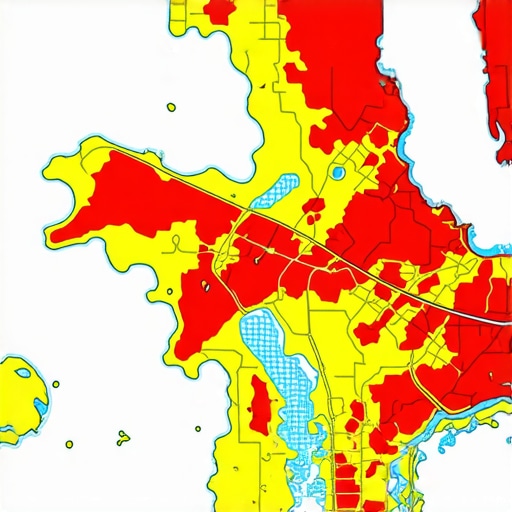
- Invest in Professional Tools: Use local seo software to track your rankings on a grid map. If you don’t know where your “dead zones” are, you can’t fix them.
- Optimize for Mobile Leads: Enable the “Message” feature on your GBP. Many patients in 2026 prefer to text for an appointment rather than call.
Understanding How Hawaii Local Search is Shifting and What Business Owners Need to Know for 2026 is the difference between a thriving practice and one that is slowly choked out by mainland competitors.
Frequently Asked Questions
Why does a dentist five miles away rank higher than me for a patient next door?
This is usually due to “Prominence” and “Relevance” signals. If the further dentist has more recent reviews, better technical optimization, and more “local signals” (like neighborhood-specific content), Google’s AI may determine they are a better result for the user despite the distance.
Does my website affect my Google Maps ranking?
Absolutely. Your website’s “Local Business Schema” and the presence of location-based keywords directly influence how Google perceives your practice’s authority. A poorly optimized website will act as an anchor, dragging down your Map Pack performance.
How often should I post on my Google Business Profile?
At a minimum, once per week. DSOs often post 2-3 times per week. These posts signal to Google that your business is active and engaged with the community, which boosts your “Prominence” score.
Can I manage my own Local SEO or do I need a pro?
While you can handle basic updates, the technical aspects of improve google maps ranking – such as API integrations, schema markup, and competitive gap analysis – often require specialized knowledge and professional tools to beat corporate competitors.
Conclusion: Reclaiming Your Territory
The battle for the Honolulu Map Pack is a war of attrition. The corporate chains are betting that you are too busy with patients to notice your rankings slipping. They are banking on your reliance on “word of mouth” in an era where everyone starts their journey on a smartphone. But by implementing a proactive google business profile seo strategy, you can flip the script.
Don’t let mainland chains dictate who gets the calls in your backyard. You have the local advantage; you just need the technical edge to prove it to Google. It’s time to stop being a victim of the algorithm and start being the dominant force in Honolulu dental search. Audit your profile today, or reach out to us for a deep-dive strategy session to see exactly where your practice is losing ground.