
The Invisible Map Metrics That Actually Tell You Why Your Hawaii Sales are Slumping
The Invisible Map Metrics That Actually Tell You Why Your Hawaii Sales are Slumping
You open your browser, type in your primary service, and there you are – sitting pretty at the #1 spot on the Google Map Pack in Honolulu. You should be celebrating. You should be hearing the phone ring off the hook. But instead, the office is quiet, and your sales dashboard is looking flatter than the ocean at Ala Moana on a windless day. This is the “Ranking Paradox,” and it is currently plaguing hundreds of businesses across the 808.
As an expert in the Hawaii digital landscape, I, Leigh Trask, have seen this scenario play out far too often. Business owners are being told by mainland agencies that ranking is the end-all-be-all of google business profile seo. But in 2026, the game has changed. While the core fundamentals of Relevance, Distance, and Prominence remain the pillars of local search, how Google interprets these signals in a hyper-local, island environment is evolving. With the rise of AI-driven results like Gemini, the “visible” metrics you’ve been tracking are often lying to you. It’s time to look at the invisible metrics – the ones that actually dictate whether a searcher becomes a customer or just another “zero-click” statistic.
Why “Ranking #1” is a Vanity Metric in the 808
In the world of Hawaii business, “Visibility” does not always equal “Viability.” Many owners check their rankings from their own office or home and assume that everyone on Oahu sees the same thing. This is a dangerous assumption. Google’s algorithm is hyper-sensitive to “Proximity Decay.” You might be #1 when standing in your shop in Downtown Honolulu, but you could be completely invisible to a potential customer just a few miles away in Kaka’ako or Liliha.
This geographic sensitivity is why Why Your Honolulu Business is Hidden from Searchers Just Two Blocks Away is a reality for many. If you aren’t looking at your ranking through a grid-based lens, you are only seeing a tiny fraction of the truth. A static #1 rank is a vanity metric because it doesn’t account for the massive drop-off that occurs as a user moves through our unique island geography. If your sales are slumping despite your “rankings,” it’s likely because your “Ranking Radius” is significantly smaller than you realize.
Metric #1: The Search-to-Action Gap (CTR and Engagement)
The first invisible metric that is likely killing your revenue is the Search-to-Action Gap. This is the discrepancy between how many people see your profile and how many people actually click “Call,” “Message,” or “Directions.” In the modern search environment, “Zero-Click Searches” are on the rise. This happens when a user finds all the information they need – or decides they don’t like what they see – without ever leaving the search results page.
Google evaluates “Prominence” through trust signals. If you are ranking #1 but your profile has a 4.2-star rating while the competitor at #3 has a 4.9-star rating with more recent photos, you are effectively paying (in time or SEO spend) to drive leads directly to your competition. The searcher sees you, judges you, and then clicks the person below you. To diagnose this, you need to dive into google business profile seo audits that look specifically at your Click-Through Rate (CTR) compared to your impressions. If you want to see how your profile truly measures up against the competition’s engagement levels, using professional google business profile seo tools is essential to bridge this gap.
Metric #2: Proximity Decay and the “Pali Highway” Effect
In Hawaii, distance isn’t just about miles; it’s about topography and travel time. We call this the “Pali Highway Effect.” Google’s proximity algorithm doesn’t just look at a straight line on a map; it increasingly understands local transit patterns and geographic barriers. Mountains, valleys, and major arteries like the H-1 act as “dead zones” for local rankings.
I have audited accounts for contractors where they dominate the “Town” side but completely vanish the moment a searcher crosses into the Windward side or the Ewa side. This is often because they lack hyper-local signals that tell Google they are relevant to those specific neighborhoods. This is a major reason Why Most Honolulu Contractors Lose the Proximity Battle on Google Maps. To combat this, you need to use specialized local seo tools to map out your ranking radius across the islands. If you are only relevant in a 2-mile radius, your sales will reflect that limitation, regardless of how high you rank within that small circle. Using local seo tools allows you to visualize these “dead zones” and adjust your content strategy to signal relevance across the ridges and valleys of Oahu.
Metric #3: Review Velocity vs. Review Volume
Most Hawaii business owners focus on their total number of reviews. They think, “I have 500 reviews, I’m good.” But in 2026, Google cares much more about Review Velocity – the speed and consistency at which you receive new reviews – than the total volume from years past. A business with 50 reviews, all from the last three months, will often outrank and out-convert a business with 500 reviews where the most recent one is from 2022.
Old reviews signal a legacy business; new reviews signal a thriving, active one. If your review velocity has stalled, your “Prominence” score is actively decaying in the eyes of Google’s AI. Furthermore, customers are savvy. They look for recency to ensure your service quality hasn’t dipped. If you want to rank google business profile assets effectively, you must implement a system for consistent, fresh feedback. Many businesses fail here because they treat review acquisition as a one-time project rather than a continuous pulse. Utilizing a google maps ranking service can help you automate this process and ensure your “velocity” stays high enough to satisfy both the algorithm and the skeptical local consumer.
Remember, proximity alone isn’t enough. As we’ve discussed in our guide on Why Proximity Alone Isn’t Getting You Into the Honolulu Map Pack, you need these prominence signals to prove to Google that you are the best choice, not just the closest one.
Metric #4: The “Gemini” Readiness Score (AI Search 2026)
We are entering the era of Search Generative Experience (SGE) and Gemini-driven results. Google is no longer just matching keywords; it is “reading” your profile, your reviews, and your website to answer complex, conversational queries. A tourist might ask, “Where is the best place for a quiet business lunch in Waikiki?” or a local might ask, “Who is the most reliable plumber for old plantation-style homes in Manoa?”
If your profile doesn’t have the specific semantic data to answer these questions, you won’t show up in the AI-summarized “best” list, even if you are technically #1 in the traditional map pack. This shift is fundamental. Your “Gemini Readiness” depends on how well your services and customer reviews mention specific neighborhoods, specific problems you solve, and the “vibe” of your business. This is a core part of How Hawaii Local Search is Shifting and What Business Owners Need to Know for 2026. If you aren’t optimizing for these conversational data points, you are becoming invisible to the next generation of searchers.
The Hidden Cost of Mainland Tactics
One of the biggest reasons Hawaii sales slump is the reliance on “Mainland” SEO strategies. Mainland agencies often don’t understand that a “5-mile radius” in Phoenix is a 10-minute drive, whereas a 5-mile radius in Honolulu could involve three different micro-climates and an hour of traffic on the H-1. They apply generic tactics that fail to account for the “Hyper-local neighborhood signals” required to beat mainland chains that are moving into the islands.
When you use a generic gmb ranking service, they often miss the nuances of our local directories and the importance of “Island-style” trust signals. This is explored further in our analysis of Why Mainland SEO Tactics are Costing Your Hawaii Business Real Leads. To truly dominate the 808, your google maps seo needs to be as local as a plate lunch from Rainbow Drive-In.
How to Audit Your “Invisible” Metrics Without a Consultant
You don’t always need to hire an agency to find out why your sales are slumping. You can perform a DIY audit of these invisible metrics by following these steps:
- Check Your Insights for “Searches vs. Actions”: Go to your Google Business Profile manager and look at the “Interactions” tab. If your “Impressions” are high but your “Calls” or “Website Clicks” are low or trending downward, you have a Search-to-Action Gap. This usually means your profile looks “stale” or your reviews are lagging behind competitors.
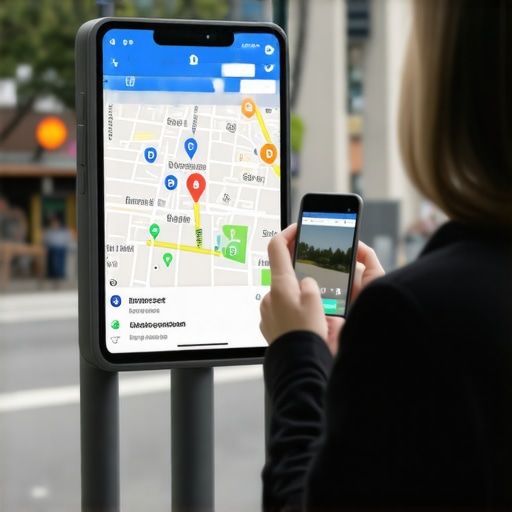
- Use a Grid-Based Rank Tracker: Don’t just search from your phone. Use a google maps rank tracker through a reputable local seo software to see how you rank in a 5×5 or 10×10 mile grid across Oahu. This will reveal the “dead zones” where your business is ghosted.
- Audit Your Review Recency: Look at your last 10 reviews. If they are older than 30 days, your review velocity is too low for 2026 standards. You need to pick up the pace to maintain prominence.
- Check Your NAP Consistency: Ensure your Name, Address, and Phone number are identical across local Hawaii directories (like the Star-Advertiser, local chambers, etc.). Inconsistencies here confuse Google’s “Relevance” algorithm.
For a more detailed breakdown, check out our guide on How to Audit Your Local Search Presence Without Hiring a Consultant. Many businesses find that Why Most Map Pack Audits Fail to Spot the Real Reason You Are Ghosted is because they only look at the surface-level data.
The 2026 Outlook: Why You Can’t Wait
As we move deeper into 2026, the gap between businesses that understand these metrics and those that don’t will widen. We are already seeing the effects of 5 GMB Optimization Honolulu Mistakes Costing You 2026 Leads. The primary mistake is complacency – assuming that because you ranked well yesterday, you will rank well tomorrow.
Google’s move toward AI-driven search means that your “Relevance” is being re-evaluated every single day based on real-time user behavior. If searchers click your profile but immediately bounce back to the search results, Google notes that your business didn’t satisfy the query. This “pogo-sticking” behavior is an invisible metric that can tank your rankings faster than any algorithm update.
Conclusion: Turning Data into Island Dominance
The “Invisible” metrics – Search-to-Action Gap, Proximity Decay, Review Velocity, and Gemini Readiness – are the true drivers of revenue in the Hawaii market. If you are tired of mainland SEO tactics failing your Hawaii business, it’s time to stop chasing vanity rankings and start focusing on viable visibility.
Whether you are operating out of a warehouse in Kalihi, a retail shop in Waikiki, or a professional office in Kapolei, the rules of the 808 are different. You need to understand the ridges, the valleys, and the traffic patterns of the digital landscape just as well as you know the H-1 during rush hour. Stop guessing why your sales are slumping and start measuring the metrics that matter. If you are ready to take control of your local presence and rank higher on google maps, the tools and the data are within your reach. Turn your invisible metrics into visible profits and ensure your business remains a staple of the islands for years to come.